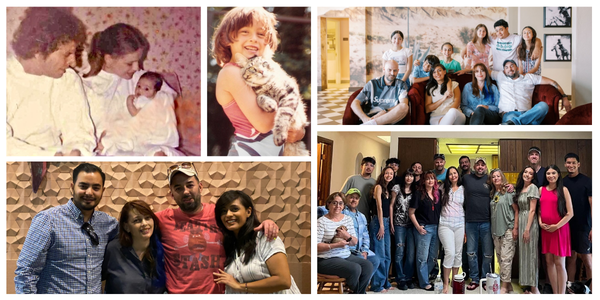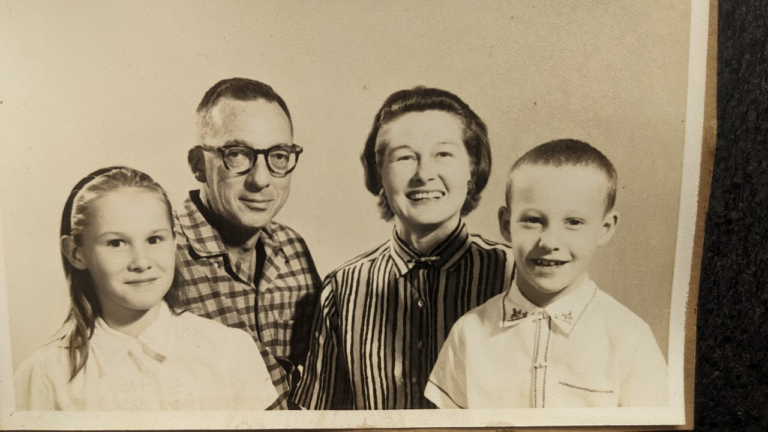


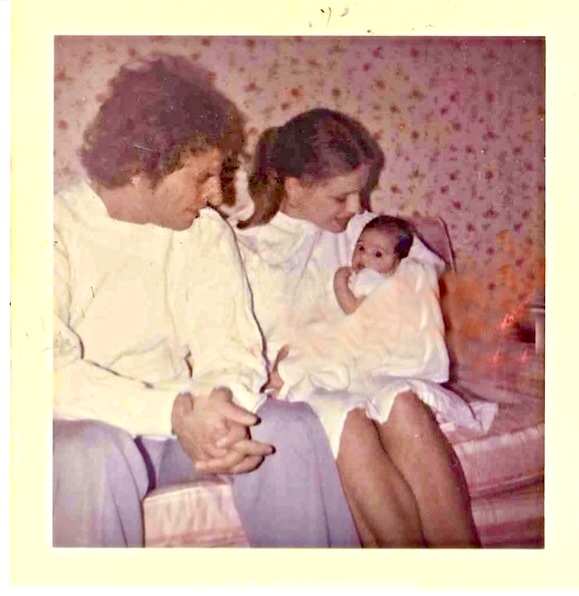
Baby Maria spent her first five weeks of life at The Cradle, where she received the loving care she needed to grow strong and healthy. This is the day she finally went home with her new family.
Growing up, her parents always talked openly about her adoption story.
“It was never a secret,” Maria says. “I would always tell everyone, and no one thought any different of me. My whole family always accepted me.”
While adoption was an open part of her life, she never felt a strong urge to seek out her birth family. She occasionally felt curious, wondering whether she might have siblings out there, but never imagined she would actually meet them.
Maria’s mother, however, always hoped that she would one day connect with her birth family, especially once Maria grew up and began to start a family of her own. “She wanted them to be at my wedding. She wanted them to know me,” Maria says.
So, they reached out to The Cradle to explore what identifying information might be available. Maria’s mother also encouraged her to take a DNA test. She agreed, mostly to make her mother happy.
The results revealed a few distant cousins, but nothing that surprised Maria. Life went on.
Then, in 2019, her mother gave her another DNA kit. Maria didn’t use it at first — but when the COVID-19 pandemic began the following year, she had time to spare and finally decided to give it a try.
The results arrived on Easter Sunday of 2020. At the top of the list: her birth mother.
“Never in a million years did I think I would ever see that,” Maria says.
They began messaging back and forth, slowly getting to know each other. Maria learned that her birth mother had lived nearby — just an hour away from her home in the Bay Area — for most of her life. She also discovered that she had three birth siblings.
Eventually, they arranged a meeting, and Maria made the short drive to see them.
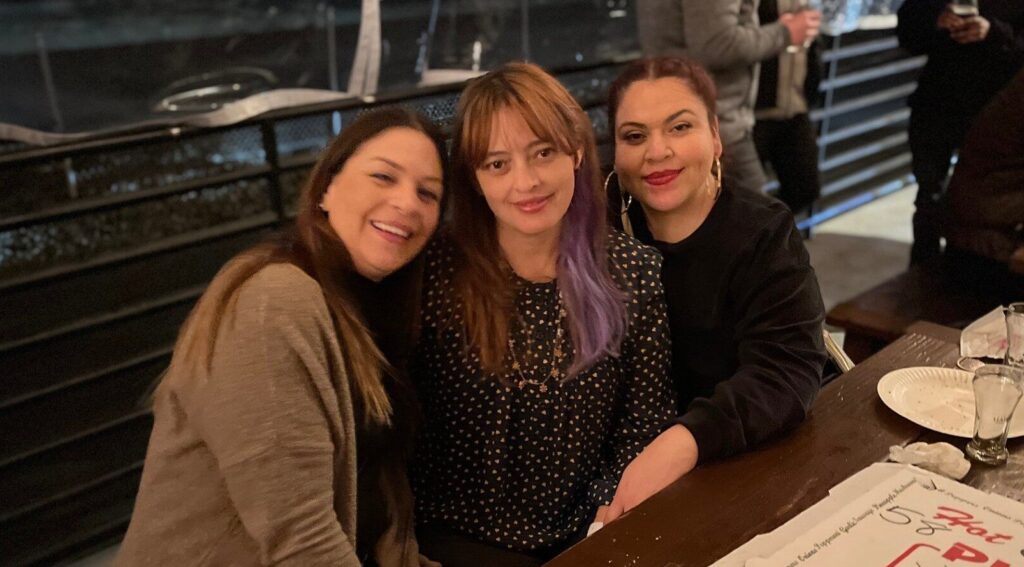
Meeting her birth mother in person was a surreal experience for Maria. It was a lot to process for everyone, including her birth siblings, who were tentative at first. “They just couldn’t believe it,” Maria says. With time, however, they started to come around. Eventually, all three wanted to get to know their newfound sister.
Then, just as Maria was beginning to build a relationship with her birth mother’s family, another unexpected connection arrived.
Another Chapter of Family
In November of 2020, Maria received a message through another DNA service. It was from a teenage girl, who turned out to be her niece. The girl’s dad was Maria’s birth brother on her father’s side — a new branch of the family she didn’t even know existed.
Maria’s birth brother was thrilled at the discovery. He immediately told his two other siblings, and they all wanted to meet Maria right away. It was the beginning of an exciting new chapter for all of them.
“They were so loving and welcoming and accepting of me from the very beginning,” Maria says. “They were happy to have me in their life. I really felt that love and connection.”
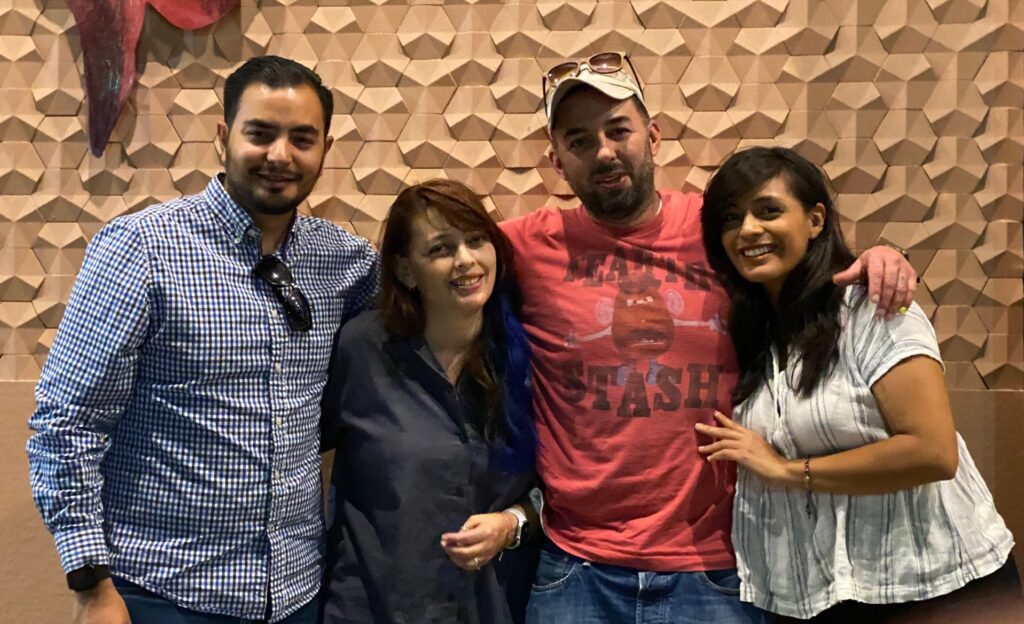
The families formed a bond that grew quickly. Wanting to nurture it, Maria and her husband made a big decision: moving from San Francisco to El Paso, where they could be closer to her birth siblings.
It was a dramatic change, both physically and emotionally. In the span of a year, Maria’s extended family had nearly doubled in size. She happily embraced her newfound family, and their relationship continued to deepen — but it was a lot to process.
“Even though everything was positive for me and came out well with this whole experience, it was also a very stressful time. I didn’t have anyone to really talk to about it,” Maria says.
So, she reached out to The Cradle for support.
A Place to Process It All
She began by retrieving her birth certificate, which was surprisingly emotional in its own right. In the process, she learned about The Cradle’s offerings for adult adoptees like her. She eventually joined two support groups — Seven Core Issues of Adoption and Search & Connection — to help process and explore her complex feelings.
It was a fascinating and healing experience for Maria, who had never had these types of conversations with another adopted person before.
“Even though their stories were different, we still had the same kinds of thoughts and feelings. Just hearing somebody else say the words was validating in a way. I just didn’t feel so alone with my thoughts, which was comforting. It was a great experience, and it helped me accept everything.”
Shortly after, in 2025, Maria got the opportunity to visit The Cradle in person.
She was attending a conference that happened to be in Chicago. “I had always been curious what The Cradle looks like,” she recalls. “You have pictures and ideas in your head. I just wanted to see it with my own eyes.”
As fate would have it, Maria’s birth mother had recently moved back to Chicago. Maria reached out, and together they booked a tour.
It was an especially emotional experience for Maria’s birth mother. She had never known where Maria had gone after she was born and had spent decades wondering and worrying about her life. Seeing The Cradle — and learning that Maria had been cared for and placed with a loving family — brought a sense of peace.
“She didn’t know where I went,” Maria says. “For her, it was more of a closure. She told me, ‘If I had known you came here and were so well taken care of, I wouldn’t have been so worried about you my whole life.’ I know that must have been hard.”
For Maria, the visit offered something meaningful, too: a chance to see where her life began and share that place with the woman who gave her life.
“It was good for both of us,” Maria says of the full-circle moment.